The Anatomy of a Valuable Local Link: Relevance, Context, Editorial Placement, and Business Connection
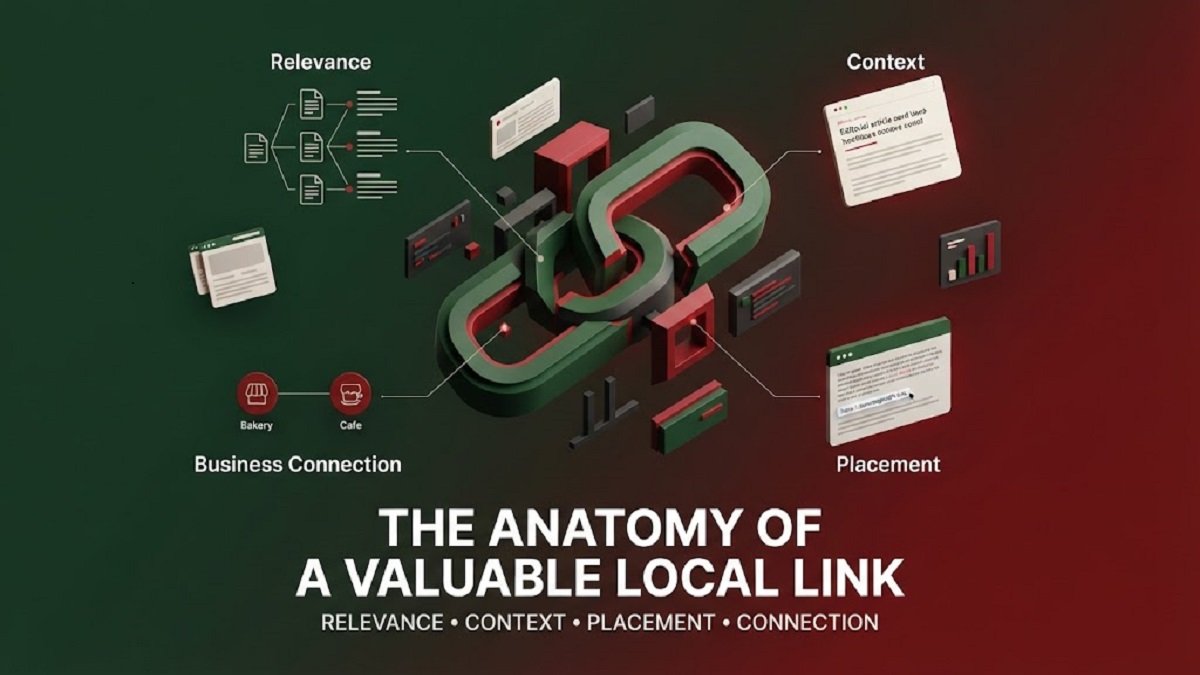
A valuable local link is more than a URL placed on another website. It represents a meaningful connection between a business and the website, organization, publication, or community that references it. For a local link to provide real value, the relationship should make sense, the surrounding content should be relevant, and the placement should feel natural to the reader.
This is what separates a valuable local link from a link that exists simply to increase the number of backlinks pointing to a website.
A business may have hundreds of backlinks and still lack meaningful connections within its market. Another business may have fewer links but earn references from relevant publications, industry organizations, partners, community groups, and local resources. The difference is often found in the quality and context of those relationships.
What Makes a Valuable Local Link?
There is no single metric that can determine whether a link is valuable.
A valuable local link usually combines several elements:
-
topical relevance
-
geographic relevance
-
editorial context
-
natural placement
-
audience value
-
genuine business relationships
-
useful destination content
-
legitimate acquisition
-
overall website quality
Think about a local construction company.
A reference from an architecture publication discussing a local development project has an obvious connection. The publication's audience may care about construction, development, and related services. The business is relevant to the topic, and the reference has a reason to exist.
Now imagine the same construction company appearing on an unrelated website simply because both businesses operate in the same city.
The geographic connection exists, but the contextual relationship is weak.
That is why a valuable local link should be evaluated through the relationship behind it, not simply through the domain where it appears.
Relevance Is the Foundation
Local relevance is often misunderstood.
Being located in the same city does not automatically make two websites relevant to each other.
A local accounting firm and a local restaurant may both serve customers in the same neighborhood. That does not mean the restaurant should randomly reference the accounting firm.
The situation changes if the restaurant is featured in an article about financial planning for independent businesses and the accounting firm is mentioned as a relevant professional resource.
Now there is a clear reason for the reference.
A strong local connection usually combines:
Geographic relevance — the businesses share a market, community, region, or customer base.
Topical relevance — their services, expertise, projects, industries, or audiences overlap.
When both are present, the potential for a valuable local link becomes much stronger.
Strong local relevance also supports a broader local SEO strategy by connecting a business with relevant audiences, organizations,and resources.
Context Gives a Local Link Its Meaning
A link should always be considered together with the content around it.
Suppose a local business publication is discussing how companies can prepare for expansion into new neighborhoods. During the article, it references a consulting company that has published research on local consumer behavior.
The reference makes sense because the surrounding content explains the connection.
Move the same URL to an unrelated page, and the situation changes.
The destination has not changed.
The context has.
This is why context is one of the most important elements behind a valuable local link.
Before pursuing a placement, ask:
Why would the reader find this reference useful here?
If there is a clear answer, the link has an editorial purpose.
If the only explanation is that the business needs another backlink, the opportunity may not be strong enough.
Editorial Placement Matters
Where a link appears can reveal how it is being used.
A link placed naturally within a useful article can support an argument, introduce additional information, or help readers explore a relevant resource.
A link placed in a generic footer, unrelated list, or automatically repeated template has a different purpose.
This does not mean every non-editorial link is automatically problematic. Website structures vary, and some sitewide references can be legitimate.
The important issue is whether the placement makes sense.
Example: Relevant Editorial Placement
A local business publication writes about marketing strategies for independent retailers. During the article, it references a local agency that has conducted research on customer acquisition.
The link supports the discussion.
Example: Weak Placement
A website places the same agency URL inside a large list of unrelated businesses without explaining why the agency is relevant.
The link may exist, but its editorial purpose is unclear.
A valuable local link should contribute to the content rather than simply occupy space on a page.
The Business Relationship Behind the Link
One of the strongest indicators of a useful local reference is a genuine relationship.
Businesses rarely operate independently.
A wedding photographer works with venues.
An architect works with contractors.
A real estate company works with mortgage professionals.
A restaurant works with event organizers.
A software company works with consultants, universities, and startup communities.
A marketing agency may work with designers, developers, publishers, and business organizations.
These relationships create natural reasons for organizations to reference each other.
Instead of asking:
Which websites can give this business a backlink?
Ask:
Which organizations already have a legitimate reason to mention this business?
That change in perspective can reveal much stronger opportunities for valuable local links.
Local Relationships Create Multiple Opportunities
A genuine business relationship can lead to different types of online references.
For example, a partnership might produce:
-
a project announcement
-
a customer story
-
a case study
-
an event page
-
a partner profile
-
an expert contribution
-
a community article
-
an industry interview
-
an original research citation
These opportunities do not have to begin with an SEO objective.
The relationship comes first.
The reference follows naturally.
This makes relationship-driven link building fundamentally different from simply searching for websites that accept backlinks.
The Reader Comes Before the Link
A simple test can reveal whether a potential placement has real value:
Would the reference help the reader?
If yes, the link has a clear purpose.
For example, imagine an article explaining how independent retailers can improve their digital customer experience. A reference to a relevant local technology company could give readers an additional resource.
Now place that company's homepage inside an unrelated article about local history.
The company is still local.
But the reference does not help the reader understand the subject.
A valuable local link should improve the user's experience, not simply improve a backlink report.
Anchor Text Should Feel Natural
Anchor text is another area where local link campaigns can become too mechanical.
There is often a temptation to use the same commercial keyword whenever a business receives a backlink.
That can make the content sound unnatural.
Real publishers use varied language.
Depending on the context, an external reference might use:
-
the business name
-
a service name
-
a product name
-
a project name
-
a descriptive phrase
-
a branded term
-
a natural sentence fragment
For example:
The company recently published research on neighborhood shopping behavior.
The words “published research” could naturally link to the relevant resource.
There is no reason to force a commercial keyword into the sentence when the surrounding content does not support it.
A valuable local link should make sense to the reader before it makes sense in an SEO report.
Authority Metrics Should Not Be the Whole Decision
Third-party SEO metrics can help identify potential websites, but they should not determine link quality on their own.
A website with strong numerical metrics may have little relevance to a particular business.
At the same time, a smaller local publication, professional association, nonprofit, community organization, or educational institution may have modest third-party metrics while representing a highly meaningful relationship.
For local link research, consider:
Relevance + Context + Audience + Editorial Quality + Business Connection
rather than relying on a single authority score.
This broader approach helps identify valuable local link opportunities that conventional metric-based prospecting can overlook.
Local Links Can Reveal a Business Ecosystem
A backlink profile can sometimes tell a larger story about a business.
Imagine a company receiving references from:
-
local industry associations
-
professional partners
-
suppliers
-
community organizations
-
local media
-
event organizers
-
educational institutions
-
customers
These links may look unrelated when viewed individually.
Together, they can show how the company participates in its local market.
This is why local link research should extend beyond directories.
A directory can provide a citation.
A relationship can provide context.
And a network of relevant relationships can create a much broader digital footprint.
Where to Find Valuable Local Link Opportunities
The strongest opportunities are not always found by searching for “local backlink websites.”
They are often hidden inside the business's existing ecosystem.
Business Partners
Start with companies that already work with the business.
Look for projects, collaborations, partnerships, customer stories, or resources where a reference would genuinely help readers.
Professional Associations
Industry associations may publish member profiles, interviews, educational resources, events, or industry reports.
Actual participation is more meaningful than joining an organization solely to obtain a URL.
Community Organizations
Local events, nonprofit projects, workshops, and community initiatives can create legitimate opportunities for online references.
The underlying involvement should be genuine.
Local Publications
Local media may reference businesses that contribute expertise, original information, projects, community stories, or useful commentary.
A strong outreach idea begins with something worth covering.
Educational Institutions
Businesses involved in mentoring, internships, workshops, research, entrepreneurship programs, or community education may naturally become part of educational content.
Suppliers and Vendors
Suppliers may publish customer stories, project examples, partner features, or case studies.
These can become strong references when the relationship is real and the content is useful.
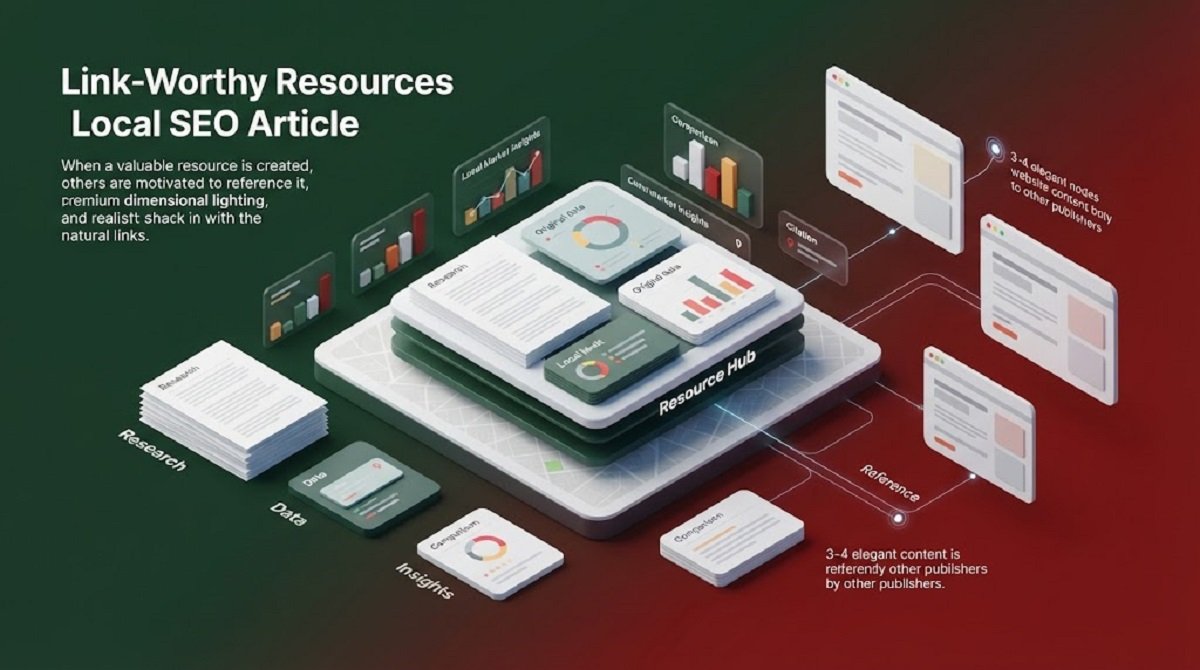
Original Research
Businesses that publish local statistics, surveys, research, or industry observations can become sources for other publishers.
In this case, the reference is earned because the information itself is useful.
Earning a Link vs. Manufacturing a Link
There is a major difference between earning a reference and manufacturing one.
An earned reference usually begins with something meaningful:
-
original research
-
expertise
-
a useful resource
-
a real partnership
-
community participation
-
a notable project
-
unique data
The publisher then has a reason to mention the business.
A manufactured link begins with the backlink itself.
The content or relationship is created afterward simply to justify the placement.
That distinction matters because the strongest valuable local link opportunities usually come from genuine reasons to reference a business.
Common Risks in Local Link Building
A local strategy can become weaker when link quantity becomes more important than relevance.
Excessive Link Exchanges
Reciprocal linking can happen naturally between genuine partners.
But creating large numbers of “you link to me, I link to you” arrangements primarily for search manipulation is a different practice.
Low-Quality Directories
Some directories provide legitimate local or industry value.
Others exist primarily to host business URLs.
A large directory count does not automatically represent a strong local link profile.
Automated Link Creation
Automation can generate large numbers of references quickly, but scale does not create editorial value.
When links are created primarily to manipulate search rankings, the strategy introduces unnecessary risk.
Irrelevant Guest Content
Publishing content on unrelated websites simply because they accept backlinks can create weak topical relationships.
Adding a city name does not turn unrelated content into meaningful local relevance.
Paid Links Without Proper Qualification
Advertising and sponsorship can be legitimate marketing activities.
The key distinction is whether the placement is properly treated as advertising or is intended to function as an editorial endorsement that passes ranking credit.
A Practical Framework for Evaluating a Local Link
A consistent evaluation process makes link research much easier.
Step 1: Identify the Organization
Who owns the website?
What does the organization actually do?
Step 2: Identify the Geographic Connection
Why is the organization connected to the target market?
The connection could involve location, customers, projects, events, or community activity.
Step 3: Identify the Topical Connection
What connects the organizations?
Look for overlap in services, expertise, industry, audience, or projects.
Step 4: Examine the Actual Page
Do not judge the opportunity only from the domain.
Read the page where the reference would appear.
Step 5: Check the Surrounding Context
Would the reference make sense to a reader encountering the page for the first time?
Step 6: Evaluate the Audience
Would readers genuinely benefit from discovering the business?
Step 7: Understand How the Link Would Be Earned
Would it come from a partnership, contribution, research, project, or editorial decision?
Or would it require an artificial arrangement?
Step 8: Evaluate the Destination
Does the linked page provide useful information or a relevant service?
Step 9: Review the Risk
Look for excessive exchanges, irrelevant placements, mass submissions, keyword manipulation, or other signals that weaken the opportunity.
Step 10: Apply the Human Test
Ask:
Would this reference still make sense if search engines did not exist?
If the answer is yes, the opportunity deserves closer consideration.
Building a Better Local Link Prospect Database
Instead of collecting hundreds of domains, build a relationship-focused prospect database.
| Field | What to Record |
|---|---|
| Organization | Potential referring organization |
| Website | Relevant website or page |
| Location | Geographic connection |
| Industry | Relevant category |
| Relationship | Existing or potential relationship |
| Audience | Who reads the website |
| Content Opportunity | Natural editorial angle |
| Resource | What the business can contribute |
| Placement | Possible location of the reference |
| Risk Notes | Potential concerns |
| Status | Research, outreach, active, earned |
This approach turns link building into relationship research.
The list may become smaller.
That is not necessarily a problem.
A smaller list of highly relevant prospects can be more useful than hundreds of poorly matched domains.
When a Valuable Local Link Is Worth Pursuing
A potential reference becomes more compelling when several conditions align.
The website is relevant.
The audience makes sense.
The geographic relationship is genuine.
The surrounding content provides a natural reason for the reference.
The destination offers something useful.
The relationship can be explained without mentioning SEO.
And the acquisition method does not depend on manipulating search signals.
When those conditions come together, the opportunity becomes much easier to justify.
When to Walk Away
Not every available backlink deserves attention.
Be cautious when:
-
the website has no meaningful connection to the business
-
the page exists mainly to host links
-
the content is unrelated
-
the placement feels forced
-
the opportunity depends heavily on keyword manipulation
-
the relationship is artificial
-
a link exchange is the primary reason for cooperation
-
the destination offers little value
-
the opportunity is based almost entirely on a third-party metric
Knowing what to reject is just as important as knowing what to pursue.
From Backlinks to Digital Relationships
The strongest local visibility strategies are rarely built around backlinks alone.
They are built around participation.
A business contributes to its community.
It works with relevant organizations.
It publishes useful information.
It develops professional partnerships.
It creates original resources.
It participates in industry conversations.
Those activities create legitimate reasons for other websites to reference the business.
The link becomes a result of meaningful activity rather than the entire objective.
That is a more sustainable way to think about local authority.
Final Takeaway
A valuable local link is ultimately a meaningful digital reference.
Relevance explains why the businesses or subjects belong together.
Context explains why the reference belongs on that particular page.
Editorial placement explains how the link contributes to the content.
A genuine business connection explains why the relationship exists.
When these elements work together, the result is more than another backlink in a spreadsheet. It becomes part of the wider digital footprint surrounding a business, its customers, its partners, its industry, and its local community.
For businesses investing in local search visibility, the better question is not:
“Where can we get another backlink?”
It is:
“Which relevant organizations have a genuine reason to reference us?”
That shift can lead to better research, stronger content opportunities, more meaningful relationships, and a more defensible local link strategy.