The Role of Original Research in Earning Editorial Links for Local Businesses

For local businesses, earning editorial links is rarely about asking enough websites to link back. The strongest links often come from something more valuable: information that other people genuinely need to reference.
That is where original research becomes a powerful link acquisition strategy.
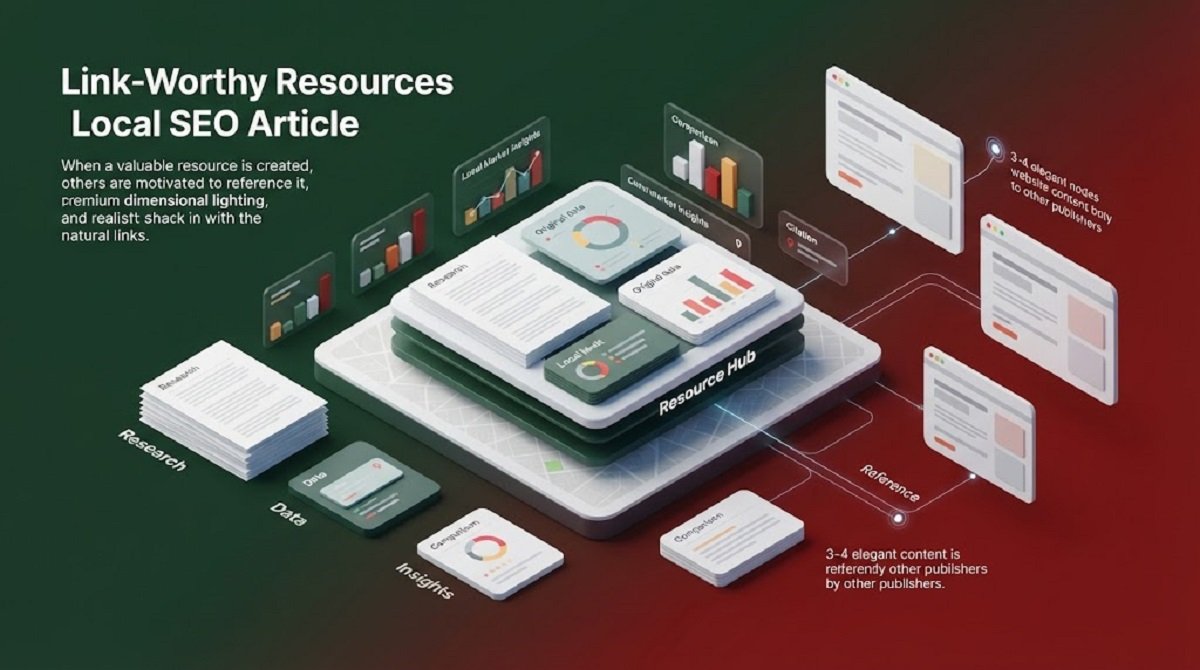
When a business publishes its own findings, analyzes local market data, surveys customers, or uncovers a meaningful trend, it creates an asset that can support more than its own marketing. Journalists, publishers, industry writers, bloggers, and other businesses may reference that information when developing their own content.
The result is an editorial link that exists because the source is useful—not simply because someone requested a backlink.
For businesses competing in local search, this distinction matters. A link earned from relevant research can strengthen the connection between the business, its market, and the broader web of information surrounding its industry.
Why Original Research Attracts Editorial Attention
Most business websites publish information that has already been discussed many times.
Service pages explain what a company does. Blog posts answer common questions. Guides summarize established knowledge. These formats can be useful, but they do not always give publishers a strong reason to cite the business as a source.
Original research changes that dynamic.
A research-based article can introduce information that does not already exist in the same form elsewhere. It might reveal customer preferences, pricing patterns, seasonal behavior, local market changes, or differences between neighborhoods.
That gives another publisher something they can reference.
For example, a local home services company could analyze hundreds of service inquiries and identify the months when specific problems become more common. A real estate firm could study changes in property listings across several neighborhoods. A marketing agency could analyze local search behavior across different business categories.
The research does not have to be groundbreaking.
It needs to be specific, credible, relevant, and useful enough to support another piece of content.
That is often the foundation of an editorial link.
Original Data Gives Publishers Something Worth Citing
Editorial links are valuable because they are usually placed within content for a reason.
A writer may need a statistic to support an argument. A journalist may need local evidence for a story. An industry publication may want to illustrate a trend with a real-world example.
Original research can provide that missing evidence.
Consider the difference between these two statements:
“Many local businesses experience seasonal changes in demand.”
That is a general observation.
Now consider:
“An analysis of 1,200 service inquiries found that weekend demand increased by 34% during the summer months.”
The second statement gives a publisher something concrete to investigate, reference, and cite.
The research itself becomes the asset.
This is why businesses should think beyond publishing articles for their own audience. A strong research piece should also be useful to people who have never heard of the company.
That wider usefulness increases the number of situations in which the research can naturally earn attention.
For businesses competing in local ssearch, this distinction matters. A link earned from relevant research can strengthen the connection between the business , its market, and the broader web of information surrounding is industry.
Local Research Can Create a Stronger Editorial Hook
One of the biggest advantages of original research for local businesses is geographic specificity.
National statistics are everywhere. Local data is harder to find.
A publisher covering a city, neighborhood, regional industry, or local consumer trend may struggle to find reliable information that reflects the area they are writing about.
A business operating in that market may be in a unique position to collect it.
This creates opportunities for research around topics such as:
-
Local consumer preferences
-
Service demand by season
-
Neighborhood-level purchasing patterns
-
Local pricing trends
-
Customer response times
-
Appointment and cancellation patterns
-
Common service requests
-
Local business growth patterns
-
Changes in customer behavior
-
Industry-specific market conditions
The important point is not simply adding a city name to a national topic.
The research itself should contain a genuine local dimension.
That makes the information more relevant to regional publications and increases its potential editorial value.
The Best Research Starts With a Question
A common mistake is collecting data first and deciding what it means later.
A stronger approach begins with a question.
What is changing in the local market?
What are customers doing differently?
What assumption about the industry might be outdated?
What information would a local journalist, publisher, or business owner find difficult to obtain?
These questions can lead to research ideas with much stronger editorial potential.
For example, instead of publishing a generic article about local customer behavior, a business could investigate:
“How Far Are Local Customers Willing to Travel for Specialized Services?”
The research could examine customer locations, service categories, travel distance, and appointment frequency.
The final report could then become useful to businesses, local publications, industry writers, and researchers.
The question creates the direction.
The data creates the evidence.
The insight creates the reason to cite it.
Original Research Does Not Always Require a Large Study
Small businesses sometimes assume that original research requires a large budget, thousands of respondents, or a dedicated research team.
That is not necessarily the case.
A smaller dataset can still produce useful findings when the methodology is clear and the subject is narrowly defined.
A local business may already have access to valuable first-party information through:
-
Customer inquiries
-
Transaction records
-
Booking patterns
-
Product demand
-
Service requests
-
Customer surveys
-
Website behavior
-
Internal operational data
-
Seasonal sales patterns
The key is to use appropriate data, protect customer privacy, and explain how the findings were produced.
A focused study of a clearly defined local market can sometimes be more useful to a publisher than a broad report with little local relevance.
Specificity can create value.
Methodology Makes Research More Trustworthy
Publishing a statistic without explaining where it came from makes the research difficult to evaluate.
That can reduce its editorial value.
A stronger research page explains the methodology in straightforward language.
Readers should be able to understand:
-
What data was collected
-
When it was collected
-
How many records or participants were included
-
What geographic area was studied
-
How categories were defined
-
How the data was analyzed
-
What limitations may affect the findings
This does not require a complicated academic presentation.
Transparency is often more important than complexity.
If a study is based on 500 customer inquiries collected over six months, say so. If the sample represents one service category rather than an entire industry, make that clear.
Honest limitations can actually strengthen credibility.
They show that the business is presenting evidence rather than trying to manufacture authority.
Turn Research Into a Resource, Not Just a Blog Post
The way research is presented can influence whether other websites reference it.
A short blog post containing three statistics may not provide enough depth for a publisher to cite.
A dedicated research resource can be much more useful.
A strong research page might include:
-
A clear research question
-
A concise summary of the findings
-
Key statistics
-
Charts or visualizations
-
Methodology
-
Relevant comparisons
-
Important limitations
-
Practical implications
-
Supporting observations
-
A clear publication date
This structure makes the information easier to understand and easier to reference.
It also creates a page that can continue attracting attention after the initial promotion period.
Visual Data Can Increase the Research Asset's Value
Numbers become easier to understand when they are presented visually.
A well-designed chart can help a publisher understand a finding within seconds.
For local research, useful visual formats may include:
-
Regional comparisons
-
Monthly trend charts
-
Category breakdowns
-
Percentage changes
-
Before-and-after comparisons
-
Market distribution charts
-
Geographic patterns
The visual should support the finding rather than decorate the page.
For example, if research shows that demand for a particular service increased steadily over twelve months, a simple trend chart may communicate that change more effectively than several paragraphs of explanation.
Publishers can also reference the underlying finding more easily when the evidence is presented clearly.
Research Can Support More Than One Editorial Story
A strong research project does not have to produce only one article.
One dataset can reveal several different insights.
Imagine a local study examining 2,000 customer inquiries.
The same dataset might reveal:
-
Seasonal demand changes
-
Differences between service categories
-
Changes in customer response behavior
-
Geographic differences
-
Average inquiry timing
-
Emerging customer preferences
Each finding could support a different editorial angle.
This creates a more sustainable approach to content marketing.
Instead of producing isolated articles every week, a business can develop a valuable research asset and extract multiple insights from it over time.
The research becomes a source of content rather than simply another piece of content.
Editorial Links Should Be Earned Through Relevance
The goal should not be to convince as many websites as possible to link to the research.
Relevance matters.
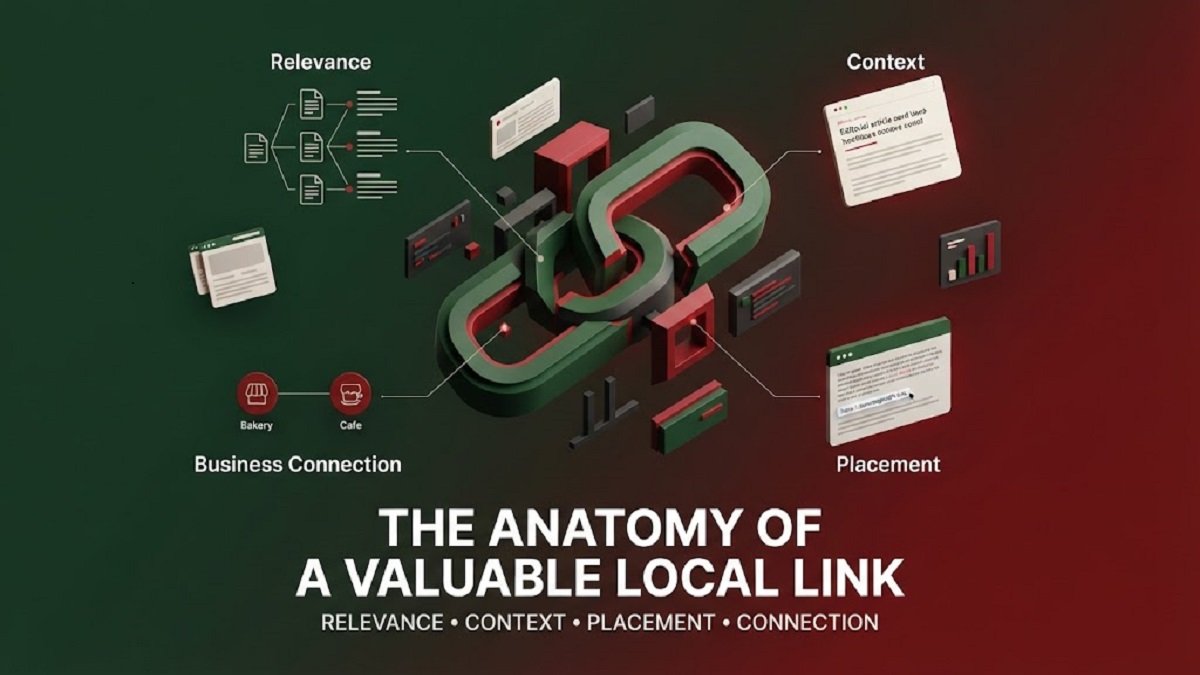
A link from a publication covering the local market, industry, consumer behavior, or a related professional topic may make much more contextual sense than a link from an unrelated website.
This is especially important when the research has a local focus.
A local business can naturally attract attention from:
-
Regional publications
-
Industry publications
-
Local business organizations
-
Community websites
-
Trade associations
-
Journalists
-
Independent researchers
-
Relevant bloggers
-
Professional publications
The strongest opportunities are usually those where the research genuinely contributes to the publisher's story.
That makes the link part of the editorial process rather than a separate SEO transaction.
Promotion Still Matters
Creating original research does not guarantee that people will discover it.
Even excellent research can remain invisible without distribution.
Once the research is published, businesses can introduce it to relevant audiences through professional networks, industry communities, journalists, newsletters, social platforms, and direct outreach where appropriate.
The outreach should lead with the finding rather than the backlink.
For example, instead of saying:
“Would you link to our research?”
a more useful approach is:
“We analyzed 1,200 local service inquiries and found a significant seasonal shift in weekend demand. The data may be useful for your upcoming coverage of changing consumer behavior.”
The first message asks for a link.
The second gives the publisher a reason to look at the research.
That difference can significantly change how the outreach is perceived.
Original Research Can Strengthen Local Authority Beyond Links
The value of research is not limited to backlinks.
When a local business repeatedly publishes credible information about its market, it can begin to develop a stronger reputation as a source of knowledge.
That can influence how customers, publishers, industry professionals, and other businesses perceive the company.
Over time, the business may become associated with a particular type of information.
For example, a regional marketing agency that regularly publishes research on local consumer behavior may become a recognizable source for that subject.
That reputation can create opportunities for interviews, citations, partnerships, media coverage, and additional mentions.
In this sense, editorial links are often one outcome of a broader authority-building process.
Measure the Research by More Than Link Count
A research campaign should not be judged only by how many links it earns.
A smaller number of highly relevant references may provide more meaningful value than a large number of unrelated mentions.
Useful measurements can include:
-
Relevant referring domains
-
Editorial mentions
-
Referral traffic
-
Brand mentions
-
Publisher engagement
-
Media coverage
-
New partnership opportunities
-
Secondary citations
-
Organic visibility for research-related topics
It is also worth monitoring whether other websites continue referencing the research months after publication.
That long-term attention can indicate that the research has become a useful resource rather than a temporary promotional asset.
The Strategic Value of Being the Original Source
The internet contains enormous amounts of repeated information.
Businesses often compete by rewriting the same subjects in slightly different ways.
Original research offers another path.
Instead of asking, “What can we publish about this topic?” a business can ask:
“What can we discover that other publishers cannot easily find somewhere else?”
That shift changes the role of content.
The business is no longer simply participating in an existing conversation. It is contributing evidence to the conversation.
That evidence can be referenced by publishers, discussed by industry professionals, shared by businesses, and discovered by potential customers.
For local businesses, the opportunity can be even stronger because genuinely useful local data is often harder to find than broad national information.
Original research can give local businesses something that conventional content often struggles to provide: a reason for other websites to reference them.
The strongest research does not need to be enormous. It needs to answer a meaningful question, use credible data, explain its methodology, present the findings clearly, and offer insights that are genuinely useful outside the business itself.
When that happens, editorial links become a natural outcome of publishing something worth citing.
The broader strategy is simple:
Collect meaningful data. Find the story inside it. Publish the evidence clearly. Make it useful to the market. Then let relevant publishers decide whether it belongs in their coverage.
That approach moves local link acquisition away from chasing placements and toward building information that earns attention on its own merit.