Building a Local Search Strategy Around Paving Services Customers Need
A paving contractor can provide excellent paving services and still struggle to get found by local customers. You may have experienced crews, quality equipment, years of practical knowledge, and a strong record of completed projects. But if people in your service area cannot find your business when they need paving services, those strengths may remain invisible online.
The problem is not always the quality of your work.
Sometimes, the real problem is how your business appears in local search.
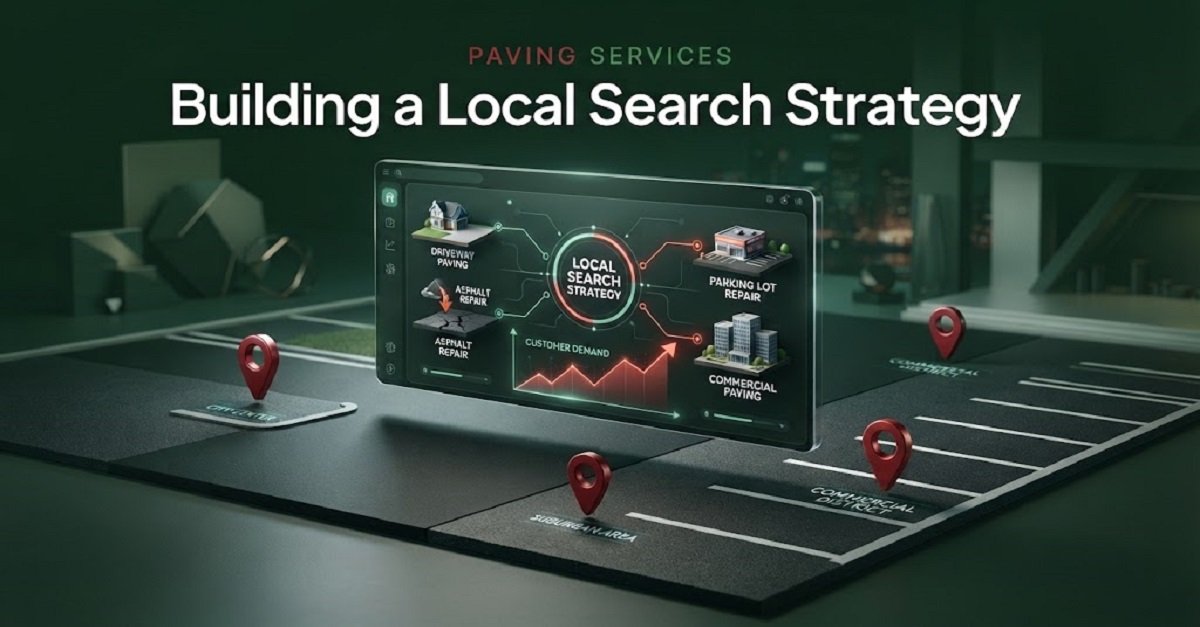
Customers do not all search for the same thing. One homeowner may need driveway paving. A business owner may need parking lot repair. A property manager may be looking for commercial resurfacing.
Each search represents a different need.
That is why a strong search strategy should begin with the paving services customers actually need rather than a broad list of generic keywords.
Can people find your business when they need paving services?
This is where many contractors face a problem.
Their online presence talks about paving in general. Their website may list several services. Their business profile may contain basic information. Yet none of these elements clearly connects the customer's problem with the exact service they need.
A better approach starts with the customer.
Instead of trying to rank for every paving-related search, build your strategy around the paving services people are actually looking for.
That means understanding customer problems, search intent, service areas, and the information people need before contacting a contractor.
Start With the Problems Customers Need to Solve
Most customers do not search for a paving contractor just because they want one.
They have a reason.
A homeowner may notice large cracks across a driveway.
A business owner may see potholes developing in a parking lot.
A property manager may need an aging asphalt surface resurfaced.
Someone preparing a new property may need a completely new paved surface.
These situations create different needs.
They can also create different searches.
For example, someone looking for driveway replacement is already thinking about a specific solution. Someone searching for asphalt repair may still be trying to understand the extent of the problem.
That difference matters.
Your website should recognize it.
The more clearly your content addresses real customer problems, the easier it becomes for visitors to understand whether your company can help.
This is why your paving services should be presented around customer needs rather than simply listed as a collection of industry terms.
Understand What Customers Are Actually Searching For
Search behavior gives you useful information.
Consider these searches:
- driveway paving
- asphalt driveway replacement
- parking lot repair
- commercial paving
- asphalt resurfacing
- pothole repair
- paving contractor near me
All of these searches relate to paving.
But they do not have the same intent.
Someone searching for “parking lot repair” already has a specific problem.
Someone searching for “commercial paving” may be planning a larger project.
Someone searching for “paving contractor near me” may still be comparing local companies.
Your strategy should account for these differences.
Instead of asking only, “What keyword should I target?”, ask a better question:
“What does this customer need right now?”
That shift can change how you build your website, content, and service pages.
Building Visibility Around Real Customer Demand
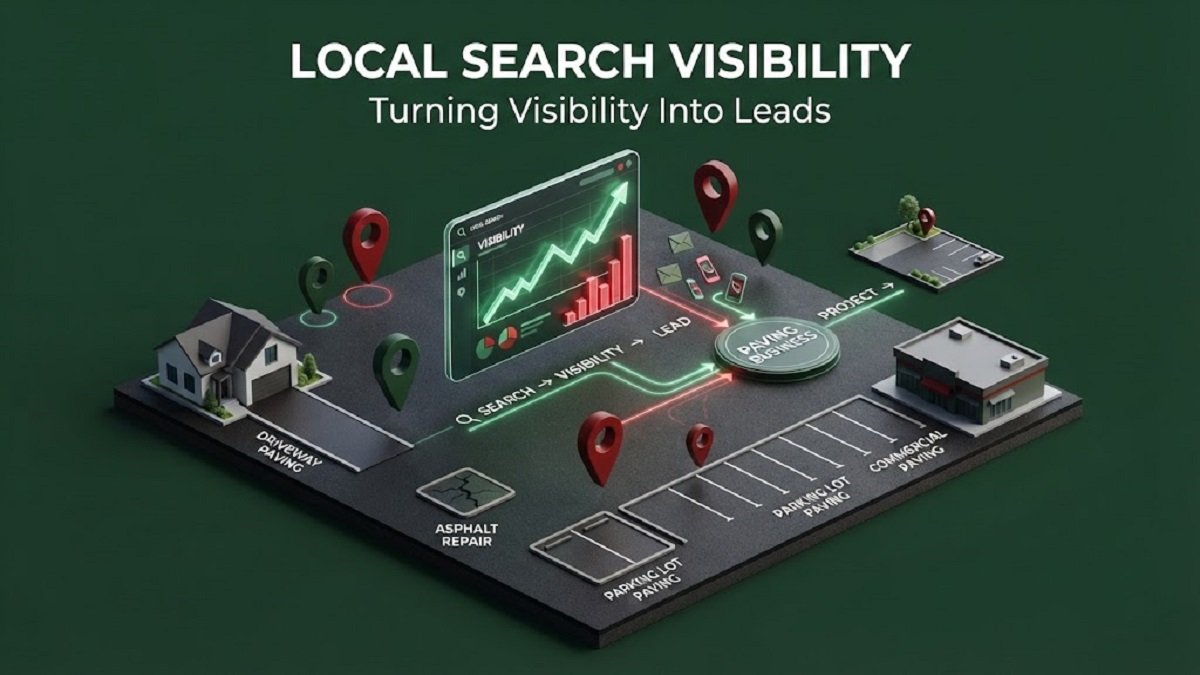
For a paving contractor, a strong online presence should do more than describe the company. It should help customers find the right service when they are ready to solve a real problem. A focused Local SEO strategy can connect your service pages, business information, service area, and customer search intent in a way that supports the actual needs of your market.
The goal is not to chase every possible search.
It is to create a clear connection between what customers need and what your company provides.
Build Your Website Around Your Paving Services
Your main services should be easy to discover.
If driveway paving is an important part of your business, customers should not have to search through your entire website to find it.
The same applies to asphalt repair, parking lot paving, resurfacing, sealcoating, or commercial paving.
Each major service should have enough information to stand on its own.
A useful service page should answer simple questions.
What is the service?
Who needs it?
What problem does it solve?
What does the process involve?
When should someone consider it?
Does your company provide the service in their area?
How can they request an estimate?
The answers do not need to be complicated.
Think about the questions customers ask when they call your office.
Those questions can often become the foundation of better website content.
The goal is not to create pages that sound like advertisements.
The goal is to create pages that help people make decisions.
Separate Residential and Commercial Search Intent
Residential and commercial paving customers may need completely different information.
A homeowner may be concerned about the appearance and durability of a driveway.
They may want to know whether their existing surface can be repaired or needs replacement.
A commercial property manager may have different priorities.
They may be concerned about traffic, access, scheduling, safety, project scope, and disruption to their business.
Both customers need paving services.
But they may search differently.
They may also evaluate contractors differently.
Your website should reflect that difference when both markets are important to your business.
Create clear pathways for residential customers and commercial customers.
Do not force everyone into the same generic service page.
When your website speaks directly to the customer's situation, the information becomes more useful.
It also creates a stronger connection between the search and your actual services.
Create Content Around Real Customer Questions
Your customers can tell you what content your website needs.
Pay attention to the questions you hear repeatedly.
Maybe customers ask whether cracks can be repaired.
Maybe they want to know when resurfacing makes sense.
Maybe they are unsure whether a parking lot needs repair or complete replacement.
These questions are valuable.
They can become blog posts, guides, FAQs, or supporting resources.
For example, you could create content around:
- Signs your driveway may need replacement
- When asphalt resurfacing makes sense
- Common causes of parking lot damage
- What to consider before a commercial paving project
- How property owners can prepare for paving work
These topics are useful because they start with actual customer concerns.
They are not created simply to fill your website with more words.
A customer may discover your article while researching a problem.
The information may help them understand what they need.
That can naturally lead them toward the relevant paving services your company provides.
Connect Customer Problems With the Right Service
A strong website should help visitors move from a problem to a solution.
Imagine someone searches for information about a damaged driveway.
They read an article about common signs of serious asphalt damage.
They realize that their driveway may need more than a simple patch.
The next logical step is to learn about driveway repair or replacement.
That is where your service page becomes important.
The same process works for commercial properties.
A business owner may search for information about potholes.
They may discover an article explaining why repeated patching may not solve the underlying problem.
From there, they can explore your parking lot repair or resurfacing service.
This creates a natural journey:
Problem → Information → Service → Contact
Your content should support that journey.
Give Your Service Area a Clear Role
Paving is a location-based business.
You generally work within a specific service area.
That means location is an important part of your search strategy.
But adding city names repeatedly is not a strategy.
It can make your content difficult to read.
It can also make pages feel artificial.
Instead, explain where you genuinely provide your paving services.
Mention the communities you actually serve.
Use real project examples when appropriate.
If your company has completed driveway work in one area or commercial paving in another, relevant project information can provide useful local context.
The goal is to help customers understand:
What you do.
Where you work.
Who you serve.
That information should be clear without making every paragraph sound like a list of locations.
Make Your Business Profile Support Your Services
Your website is not the only place where customers may discover your company.
Your Google Business Profile can also play an important role.
A potential customer may see your business listing before visiting your website.
They may check your services.
They may look at photos.
They may read reviews.
They may call directly.
That makes accurate business information important.
Your listed services should reflect what you actually offer.
Your business details should remain accurate.
Your photos should represent your real work.
Your website should support the same overall message.
A customer should not see one version of your business on your website and a completely different version on your business profile.
Consistency creates confidence.
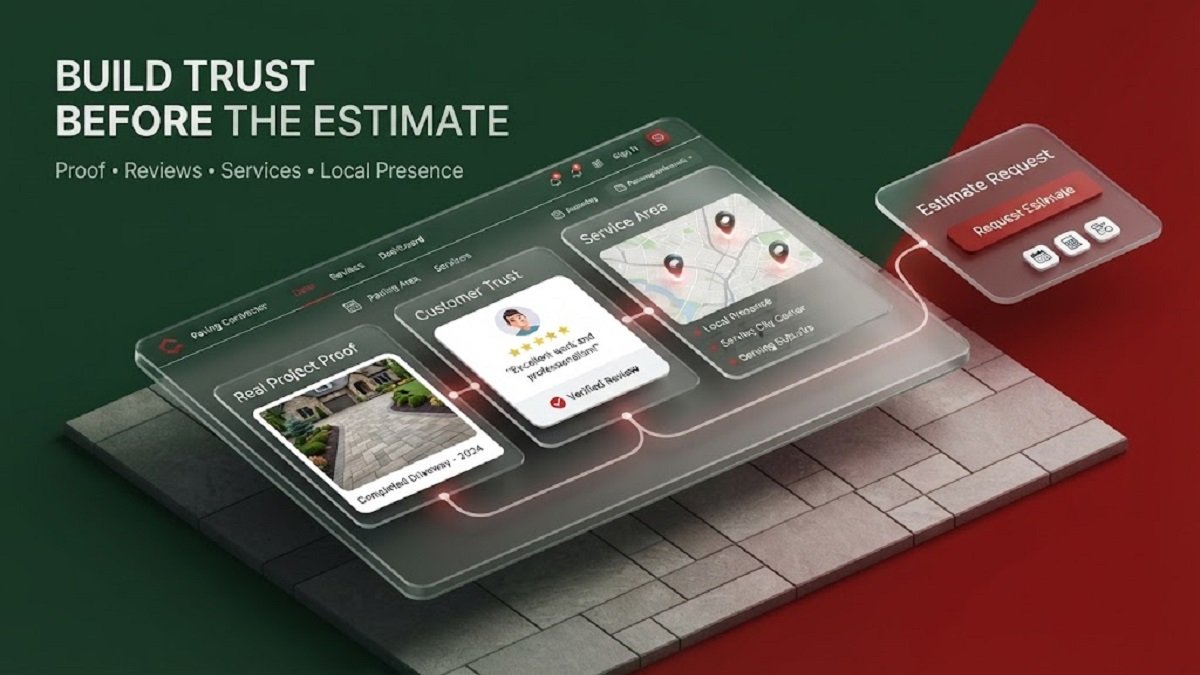
Use Real Paving Projects as Proof
Paving is a service where visual proof can be powerful.
Your completed projects can show what your company is capable of.
Use clear photographs of actual work.
Show driveways.
Show parking lots.
Show resurfacing projects.
Show repairs.
Show different property types when possible.
But do more than upload photographs.
Give the project some context.
What was the original problem?
What service did you provide?
What type of property was involved?
What changed after the project?
This turns a simple image into a useful project example.
It also gives potential customers a better understanding of your experience with different paving services.
Real project information is often more convincing than generic claims about quality.
Let Customer Reviews Tell the Story
Reviews can also support your service strategy.
A simple review saying “Great company” is positive.
But a genuine review that explains the customer's experience provides more context.
A customer may naturally mention a driveway replacement.
Another may talk about parking lot repairs.
Someone else may describe the communication, scheduling, or final result.
Never create fake reviews.
Never tell customers what they must write.
Instead, provide a good experience and make it easy for satisfied customers to share honest feedback.
Over time, these experiences can help potential customers understand what your company does.
They can also reinforce the types of paving services you are known for.
Build Useful Connections Between Your Pages
Your website should guide visitors.
Do not leave every page standing alone.
Connect related content naturally.
A blog post about driveway damage can link to your driveway paving service.
An article about parking lot problems can connect to your commercial services.
A guide about resurfacing can point readers toward your resurfacing page.
These connections help visitors find more relevant information.
They also create a clearer structure across your website.
A person who starts with a question should have an easy way to continue toward an answer.
The goal is not to force a sales message.
It is to make the next step obvious.
Use Local Search Data to Find Better Opportunities
Once your website is active, pay attention to what customers are doing.
Look at the searches that bring visitors to your site.
Review which service pages attract attention.
Track calls and estimate requests.
Pay attention to the services customers mention when they contact you.
You may find patterns.
Perhaps driveway replacement brings more inquiries than new driveway installation.
Maybe parking lot resurfacing is becoming a larger part of your business.
Maybe customers repeatedly ask about asphalt repairs.
These insights can influence your future content.
They can also help you decide which paving services deserve more attention.
A search strategy should evolve as your business learns more about its market.
Focus on Qualified Traffic
More traffic is not always better.
A paving contractor does not need thousands of visitors who have no reason to become customers.
The goal is qualified traffic.
You want people who actually need your paving services.
That means relevance matters.
Ask yourself:
- Does this search relate to a service we provide?
- Is the customer located within our service area?
- Does the search indicate a real problem or project?
- Can our company realistically help?
If the answer is yes, that search deserves attention.
This approach keeps your marketing connected to revenue rather than vanity metrics.
Choose the Paving Services That Matter Most
You do not need to promote every possible paving service at the same time.
Start with the services that matter most to your business.
Maybe residential driveway work is your biggest source of revenue.
Maybe your company specializes in commercial parking lots.
Maybe asphalt repair and resurfacing are your strongest services.
Build your strategy around those priorities.
Give important paving services their own clear content.
Explain the problems they solve.
Show relevant project examples.
Answer common customer questions.
Make it easy for people to contact you.
This creates a much stronger foundation than trying to create a page for every possible phrase.
Think Like the Customer
Contractors naturally think about their work from a professional perspective.
Customers think about it differently.
They think:
“My driveway is getting worse.”
“Our parking lot has too many potholes.”
“We need the property ready for customers.”
“Can this surface be repaired?”
“How much work does this project actually need?”
Your website should meet customers at that point.
Do not assume they already understand industry terminology.
Explain things clearly.
Use short sentences.
Answer practical questions.
Show real examples.
Then introduce the relevant paving services as the solution to the problem.
That makes the content feel more helpful.
It also makes your business easier to understand.
Choosing Paving Services Based on Local Customer Demand
A strong search strategy should reflect the paving services local customers actually need. One customer may be searching for driveway paving, while another may need asphalt repair or parking lot resurfacing. Commercial property owners may be looking for larger paving services that require experience with busy properties and project planning.
Your website should make these differences clear. Each important service should explain what it involves, what type of problem it addresses, and who may need it. When your content connects customer problems with the right paving services, visitors can find useful information without having to search through unrelated pages.
You should also focus on the paving services your company genuinely provides. There is little value in attracting visitors for work you do not offer. A focused strategy helps you build content around relevant demand and makes your website more useful to people who are ready to take the next step.
When the right customer finds the right paving services at the right time, your website has a much better chance of turning a search into a real business opportunity.
Where Local Visibility Becomes a Business Advantage
For a paving contractor, visibility is not simply about appearing higher in search results.
It is about being present when someone has a real paving problem.
Start with the services you provide.
Understand the customers who need them.
Then make it easier for those customers to discover and evaluate your company.
A strong local search strategy starts with customer demand.
It does not start with a random keyword list.
Think about the problems your customers face.
Think about the paving services they need to solve those problems.
Then build your website around those connections.
Create clear service pages.
Answer real questions.
Show completed projects.
Keep your business information accurate.
Make your service area clear.
Connect related pages.
And pay attention to which services generate real inquiries.
You do not need to rank for every paving-related search.
You need to become easier to find for the searches that matter to your business.
When your website connects customer intent with relevant paving services, it becomes more useful to both searchers and your business.
A paving contractor can have excellent paving services and years of experience, but that does not automatically mean local customers will find the business online. A well-planned Local SEO approach can help connect those services with customers searching for them in the areas the contractor actually serves. When your website, service pages, business information, and Local SEO efforts support the same customer-focused strategy, your business has a stronger opportunity to turn local searches into calls, estimate requests, and new paving projects.
You do not need to rank for every paving-related search.
You need to become visible for the searches that matter.
Build around real customer problems. Focus on the services you actually provide. Answer useful questions. Show real work. Make your service area clear. Keep your online information consistent.
When the right customer finds the right paving services at the right time, a search can become much more than a website visit.
It can become a conversation.
An estimate.
And eventually, a new paving project.