Creating Link-Worthy Resources: What Local Businesses Can Publish That Others Want to Reference
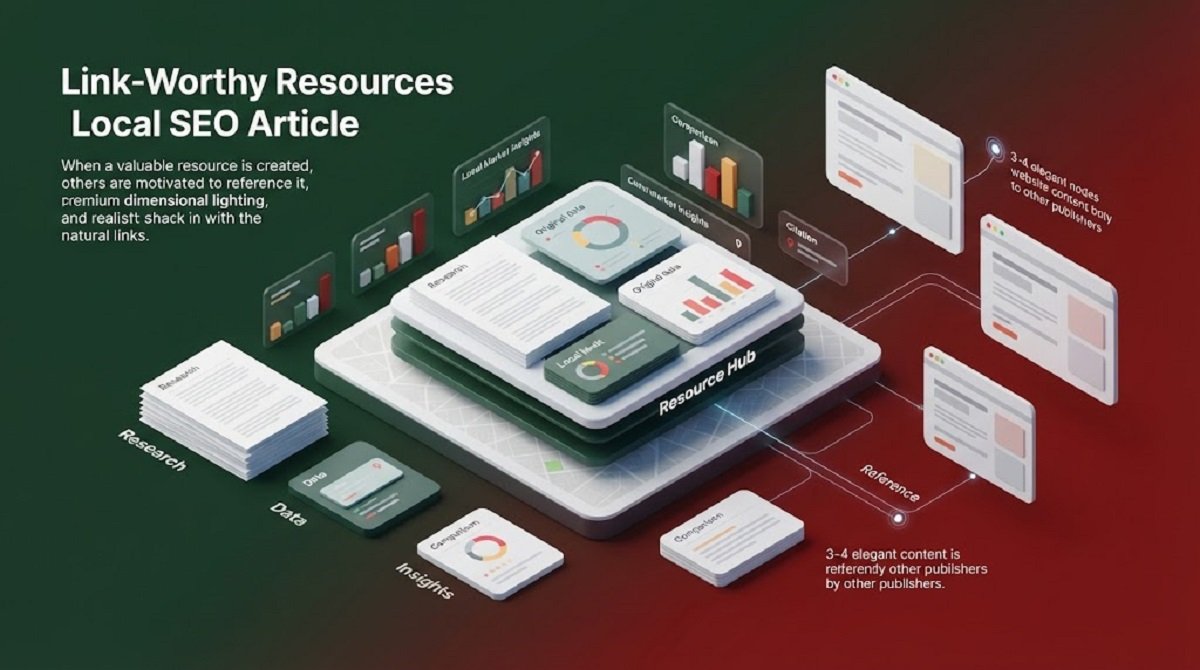
Link-worthy resources give local businesses a practical way to create content that people genuinely want to reference. Instead of publishing another generic article and hoping for a backlink, businesses can build link-worthy resources around information that solves a real problem.
The strongest link-worthy resources are not created simply to increase the number of links pointing to a website. They are created because the information is useful, original, difficult to find, or valuable enough to support someone else's work.
For a local business, that could mean original research, local market data, industry benchmarks, useful comparisons, visual guides, calculators, or carefully organized information.
When these link-worthy resources provide something that other websites cannot easily reproduce, they have a better opportunity to earn genuine references.
Start With a Real Information Gap
The foundation of effective link-worthy resources is usually an information gap.
What are customers asking that existing websites do not answer particularly well? What information does your team work with every day that other businesses, publishers, or customers might find useful?
A local contractor may notice that customers regularly ask about seasonal project costs. A property management company may have years of insight into rental demand across different neighborhoods. A marketing agency may have seen recurring customer acquisition patterns across several local industries.
That knowledge can become the foundation of link-worthy resources.
The important part is finding information that has a clear purpose instead of creating another article simply because a keyword has search volume.
Turn Business Experience Into Original Information
Local businesses often have original insights sitting inside their own operations.
Everyday work creates observations, patterns, comparisons, and lessons. Yet most of that information never reaches the website.
Publishing some of it can make link-worthy resources much more distinctive.
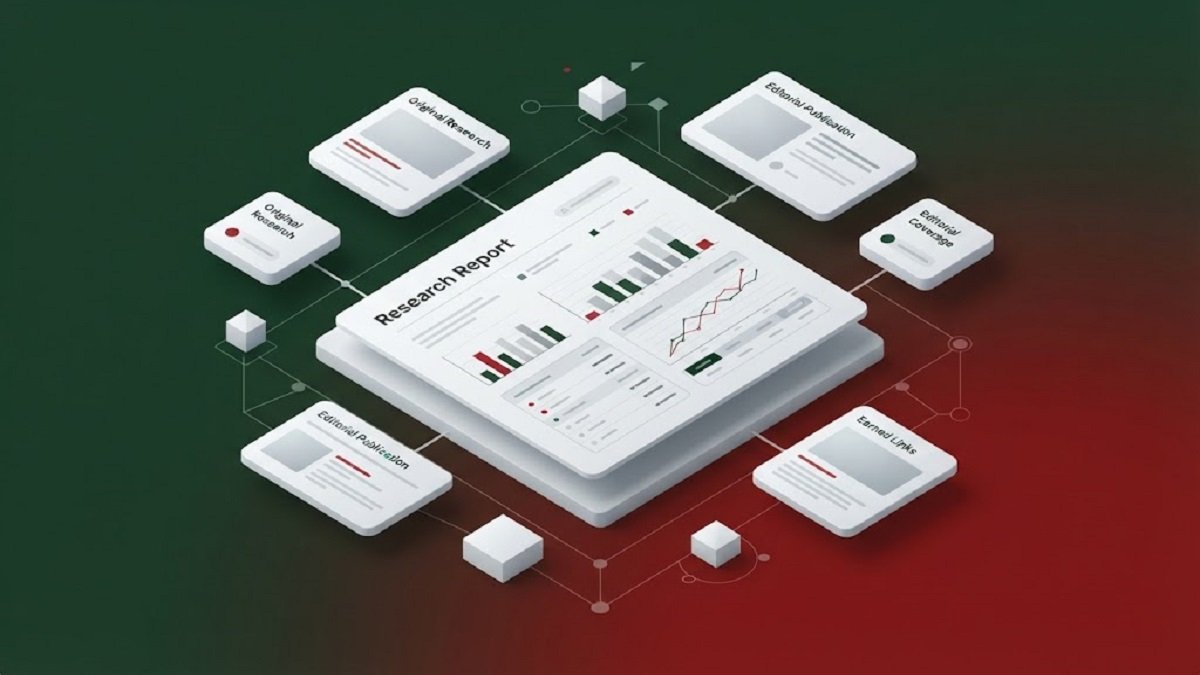
Imagine a home services company notices that certain repairs become significantly more common during particular months. Instead of writing another general home maintenance article, the company could analyze its service history and publish a seasonal demand report.
That report becomes more than a normal blog post.
A local publication covering homeowner trends could reference the findings. An industry website might use the statistics. Another business could share the research with its audience.
The value comes from the information itself.
Original Research Does Not Have to Be Huge
Original research can sound intimidating, but creating useful link-worthy resources does not always require a large research department or thousands of respondents.
A focused survey, customer study, or analysis of relevant local data can produce useful findings when the process is clearly explained.
For example, a local marketing agency could survey small businesses about their biggest customer acquisition challenges. A real estate company could analyze publicly available housing data across several neighborhoods. A professional service firm could publish an annual benchmark based on anonymized internal observations.
The important part is transparency.
Explain where the information came from, when it was collected, what was measured, and how the findings were interpreted.
This makes link-worthy resources easier for readers and publishers to understand. It also gives other websites a clearer basis for deciding whether the information is reliable enough to reference.
Create Something That Saves People Time
Some of the most useful link-worthy resources are surprisingly simple.
They do not necessarily contain complicated research. Instead, they make someone's work easier.
Think about information a reader might otherwise have to collect from several websites. If your business can bring that information together in a clear and reliable format, you have created something genuinely useful.
A local business might publish:
-
A regional pricing benchmark
-
A neighborhood comparison guide
-
An industry planning calendar
-
A local market statistics page
-
A detailed checklist
-
A comparison table
-
A curated industry resource
-
A calculator or planning tool
These are effective link-worthy resources because they solve practical problems.
Someone researching a topic does not always need another opinion. Sometimes they simply need reliable information in one place.
Give Other Publishers a Reason to Cite You
There is another audience worth considering when developing link-worthy resources: people who publish content themselves.
That includes journalists, bloggers, industry writers, researchers, professional organizations, and local publications.
These people often need facts, statistics, examples, and original sources to support their work.
If your website contains a useful statistic, original finding, clear chart, or well-documented local insight, your link-worthy resources may become one of the sources they use.
This is different from creating content solely for search engines.
You are creating information that can help another person explain a subject more accurately.
When the resource genuinely helps them, a reference becomes a natural possibility.
Local Data Can Make Content More Distinctive
Broad industry information is often easy to find. Local information can be much harder to find.
That difference creates an opportunity for link-worthy resources.
A report about national consumer behavior may be interesting, but information showing how that behavior differs between specific communities can be much more useful to a local audience.
A restaurant group, for instance, could analyze seasonal dining patterns in its market. A home improvement company could publish data about the most requested renovation projects in its service area. A local agency could compare customer acquisition trends across several business categories.
The closer the information is to a specific market, the harder it becomes for another website to simply reproduce the same resource.
For businesses investing in local SEO, original local information can also support broader efforts to establish relevance and authority.
Do Not Underestimate Visual Resources
Visual content can make link-worthy resources easier to understand and easier to reference.
A complicated set of numbers can become a chart. A geographic trend can become a map. A lengthy process can become a visual framework.
Imagine a local business publishes a report containing several years of market data. Instead of presenting every finding as text, the business could create original charts showing the most important changes.
Those visuals can become useful reference points on their own.
A publisher may mention one statistic in an article and link to the full study. Another website may use the research as supporting evidence.
One well-developed resource can therefore produce several useful content assets.
Build Resources Around Questions People Actually Have
The strongest link-worthy resources often begin with real questions.
Not simply keywords.
There is an important difference.
A keyword tells you what someone searches for. A question can reveal what they are actually trying to understand.
Suppose customers repeatedly ask why the cost of a service varies between neighborhoods.
That question could lead to a much more valuable resource than a generic article targeting a service term.
You could research the factors behind the difference, collect local data, explain the variables, and present the findings in a straightforward way.
Now the content answers a genuine customer question while also giving publishers information they can reference.
Make the Resource Easy to Understand
Even the best link-worthy resources can lose their value when they are difficult to navigate.
If someone has to read thousands of words just to find one important statistic, they may simply look elsewhere.
Make the useful parts easy to find.
Use descriptive headings, short paragraphs, tables, charts, source notes, and concise explanations. If you publish research, include the date and explain how the information was collected.
There is no need to make every section visually complicated.
The goal is simple: help readers understand the information without making them work unnecessarily hard for it.
That also makes link-worthy resources easier for publishers to evaluate when deciding whether they are worth citing.
Promotion Still Matters
Publishing link-worthy resources does not guarantee that people will find them.
Even excellent research can remain unnoticed if the right audience never discovers it.
After publishing, identify websites, organizations, journalists, and professionals who already cover the subject.
Then introduce the resource where there is a genuine connection.
The outreach does not need to begin with a request for a backlink.
Instead, explain what the resource contains and why it could be useful to their audience.
For example, if a local business has published original research about customer behavior, reaching out to publications that already cover that market makes more sense than sending the same message to hundreds of unrelated websites.
Relevant outreach is usually more meaningful than high-volume outreach.
Keep Valuable Resources Current
Some link-worthy resources can continue attracting attention long after they are published.
But information changes.
Statistics become outdated. Markets shift. Regulations change. Consumer preferences evolve.
If a resource continues to attract visitors or references, review it periodically. Update outdated figures, replace broken sources, refresh examples, and make the publication or update date clear.
This matters particularly for research-based content.
A publisher is more likely to rely on a source when its date, methodology, and relevance are easy to understand.
Keeping valuable resources current can extend their usefulness well beyond the original publication date.
Think Beyond the Backlink
The value of link-worthy resources is not limited to backlinks.
A strong resource can generate referral traffic. It can give a sales team something useful to share. It can create relationships with publishers and industry organizations. It can provide material for social content. It can demonstrate that a business understands the market it serves.
Most importantly, it gives the business something worth talking about.
That is a stronger foundation than publishing content simply because there is a keyword to target.
The most effective link-worthy resources often begin with information a business already knows but has never taken the time to organize and publish.
Look at the questions customers ask. Look at the knowledge your team has built through real work. Look at the information your market is still missing.
Then turn those insights into something genuinely useful.
It could be a research report, a local data study, an industry benchmark, a visual guide, a calculator, or a practical resource.
The goal is not to create content that asks for links.
It is to create link-worthy resources that give other people a genuine reason to reference your work.
When a local business consistently publishes original, relevant, and useful information, external references can become a natural result of the value it provides.