Google Profile Optimization and Search Feature Eligibility: How Business Information Influences What Local Search Experiences Can Surface
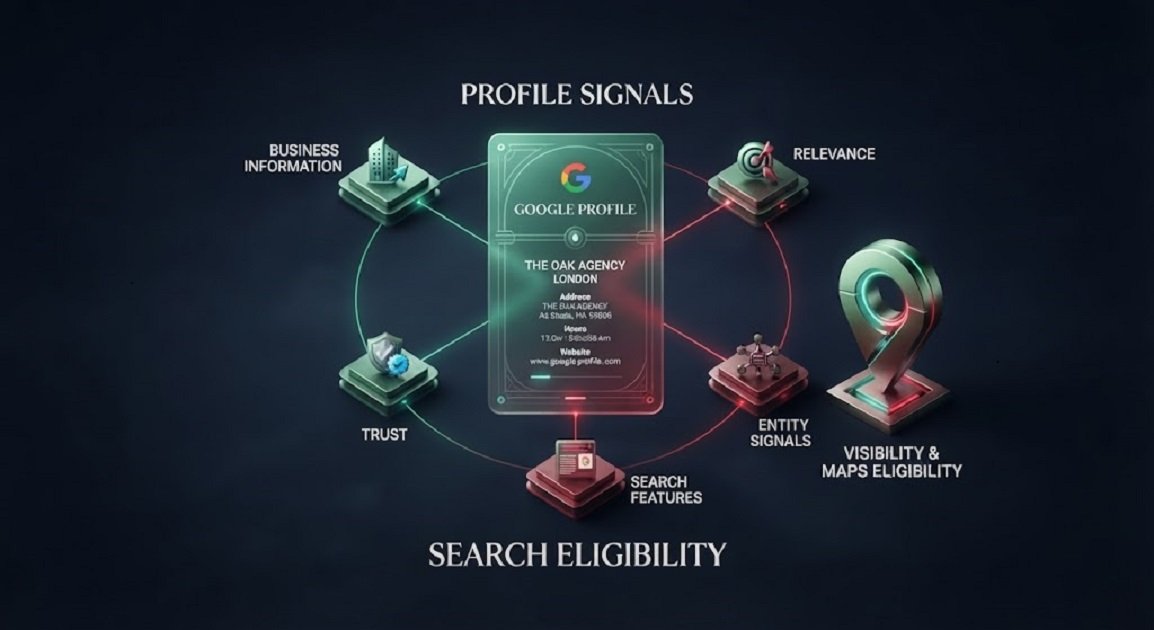
Local search is no longer limited to a business appearing in traditional Google Maps results. Google Profile Optimization plays an important role in helping search systems understand a business, its services, location, and relevance to customer searches. Depending on the query, business type, location, and available information, customers may encounter local results through Maps, local packs, business profiles, service-related searches, directions, calls, reviews, and other search experiences.
This makes Google Profile Optimization more than a simple visibility exercise. The information connected to a business profile can help Google understand what the business offers and which local search experiences may be relevant to potential customers.
For businesses competing in crowded local markets, the real challenge is not simply getting a profile indexed. It is maintaining accurate, consistent, and useful information that supports meaningful search visibility.
Search Visibility Depends on More Than Profile Completion
A complete Google Business Profile can provide Google with important information about a business, including its name, category, location, services, hours, website, and customer-facing details.
However, filling every available field does not automatically guarantee visibility across every search feature.
Google has to interpret business information in relation to the user's search. A profile may be relevant for one type of query but less relevant for another. This is why businesses should think beyond profile completion and focus on information quality, relevance, and consistency.
Effective Google Profile Optimization helps create a clearer connection between what a business offers and what customers are searching for. Instead of treating every profile field as an SEO opportunity, businesses can use each field to communicate useful information.
Business Information Helps Establish Search Relevance
Search relevance begins with understanding what a business actually does.
For example, a company may provide several related services, but its primary category and supporting business information can help establish its core identity. Service descriptions, business categories, website content, and other profile signals can work together to provide additional context.
This is where Google Profile Optimization becomes a strategic process. The objective is not to add as many keywords as possible. It is to create a clear and accurate description of the business.
This does not mean businesses should add every possible category or repeatedly insert keywords into their profile.
Over-optimization can make business information less natural and less useful. Instead, the goal should be to communicate the business accurately.
A well-structured profile answers important questions:
-
What does the business offer?
-
Who does it serve?
-
Where does it operate?
-
Which services are most important?
-
What information would help a customer make a decision?
The clearer those answers are, the easier it becomes to maintain a consistent local search presence.
Accuracy Can Affect the Customer Experience
Business information is not only used for search discovery. It also affects what customers see after discovering a business.
Incorrect hours can create missed visits. An outdated service list can create mismatched expectations. An incorrect phone number can interrupt the customer journey before a conversation even begins.
That makes accuracy an important part of Google Profile Optimization.
Businesses should regularly review information that can change over time, including:
-
Business hours
-
Holiday hours
-
Phone numbers
-
Website URLs
-
Service availability
-
Business categories
-
Address or service-area information
-
Business descriptions
-
Photos and visual assets
Keeping these details current creates a more reliable experience for both search users and the platforms interpreting the business.
A strong Google Profile Optimization process should therefore include regular information checks instead of a one-time profile setup.
Relevance Is Closely Connected to Customer Intent
Not every local search represents the same intent.
A customer searching for “dentist near me” has a different intent from someone searching for “emergency dentist open now.” Another customer may search for a specific service, such as cosmetic dentistry or teeth whitening.
The underlying business may be the same, but the search context changes.
This is where profile information becomes especially important. Businesses need to represent their services accurately enough to match legitimate customer needs without trying to manipulate every possible query.
A strong profile supports the business's real-world identity rather than creating an artificial version of it for search engines.
With Google Profile Optimization, businesses can focus on making their information clear enough to support different customer journeys while keeping the underlying business information accurate.
Search Features Are Context-Dependent
Local search experiences can change depending on factors such as query intent, location, business relevance, availability of information, and the features supported by the search environment.
This means businesses should avoid treating search visibility as a fixed position.
A profile might receive strong exposure for branded searches while appearing differently for non-branded service queries. It may also have different visibility depending on the searcher's location or the type of local information being requested.
Instead of asking only, “Where does my business rank?” a more useful question is:
“For which customer searches does my business information provide enough relevant context to be considered?”
That shift creates a more sustainable approach to local search strategy and gives Google Profile Optimization a broader role in local visibility.
Consistency Builds a Stronger Information Layer
Google does not operate in isolation. Customers may encounter business information across websites, directories, social platforms, review sites, and other sources.
When important business details conflict across these sources, it can create unnecessary uncertainty.
For example, a business may have one phone number on its website, another in a directory, and outdated hours on a social profile. Even if each individual listing seems minor, inconsistent information can create a fragmented digital presence.
This is why Google Profile Optimization should be considered part of a broader local SEO information strategy.
The goal is not simply to make one profile look complete. It is to maintain a consistent representation of the business across the places where customers and search systems may encounter it.
Services Need Context, Not Just Keywords
Adding services to a business profile can help communicate what the business provides. But service information should reflect genuine offerings.
A common mistake is treating service fields as additional spaces for keyword insertion.
A better approach is to describe actual services in clear customer language.
For example, instead of repeatedly using variations of the same keyword, a local marketing agency could clearly distinguish between services such as:
-
Local SEO
-
Google Business Profile management
-
Local citation management
-
Review strategy
-
Local search reporting
Each service provides a different piece of information about the business.
The purpose is clarity. When customers understand the offering quickly, the profile becomes more useful beyond its potential search value.
This approach also supports better Google Profile Optimization because the profile communicates real services instead of relying on repetitive keyword variations.
Business Changes Require Profile Maintenance
Local businesses rarely remain static.
They add services, change hours, move locations, expand service areas, update websites, introduce new team members, or change the way customers contact them.
A profile that was accurate six months ago may no longer represent the business accurately today.
This makes profile maintenance an ongoing process rather than a one-time SEO task.
Businesses should create a regular review process to identify outdated information and confirm that important details still match the current operation.
This is especially important after major business changes.
Regular maintenance is one of the practical foundations of Google Profile Optimization because search visibility can become less useful when the information customers see no longer reflects the actual business.
Reviews Add Customer-Generated Context
Reviews provide another layer of information around a local business.
Customers naturally describe services, experiences, locations, staff interactions, and specific aspects of a business. These comments can help future customers understand what the business is known for.
Businesses should not attempt to manufacture specific review language. Instead, they should focus on providing a strong customer experience and encouraging authentic feedback.
Review management should also include monitoring recurring themes. If customers repeatedly mention a particular service or experience, that information can reveal how the market actually perceives the business.
That insight can complement the information presented through the business profile and website.
As part of Google Profile Optimization, businesses can use these customer insights to better understand how their services are perceived, while keeping customer feedback authentic.
Website and Profile Information Should Support Each Other
A Google Business Profile should not exist as a disconnected SEO asset.
The business website should clearly explain the services, locations, customer experience, and value proposition represented by the profile.
For example, if a profile highlights a particular service, the website should provide useful information about that service rather than sending visitors to an unrelated page.
This creates a more coherent customer journey:
Search → Business Profile → Website → Service Information → Contact or Visit
When these stages communicate the same business identity, customers have less uncertainty and more information to work with.
This connection also strengthens the broader role of Google Profile Optimization, because the profile becomes one part of a consistent local search experience rather than an isolated listing.
Eligibility Is Not the Same as Guaranteed Visibility
One of the most important distinctions in local search is the difference between being eligible for a search experience and actually appearing prominently within it.
A business may meet the basic requirements to appear for a particular type of search without receiving consistent visibility for every relevant query.
Local search systems have to evaluate many businesses and many contextual signals. Search results can also vary based on the user's query, location, and other factors.
Therefore, businesses should avoid promises such as guaranteed placement in a particular local feature.
A more realistic strategy is to improve the quality, accuracy, and relevance of the information available about the business.
This is an important principle when building a Google Profile Optimization strategy: better information can support stronger relevance, but no optimization process should be presented as a guarantee of a particular search position or feature.
A More Strategic Approach to Google Profile Optimization
Advanced local SEO requires businesses to look at their profiles as information systems rather than static listings.
A useful Google Profile Optimization framework is to review five areas regularly:
1. Business Identity
Does the profile accurately represent the real business?
2. Service Relevance
Are the listed services genuine, specific, and aligned with customer needs?
3. Location Signals
Are the address, service area, and location-related details accurate?
4. Customer Signals
Are reviews, photos, and customer interactions providing useful context?
5. Cross-Platform Consistency
Does the information match the business website and other important online sources?
Together, these areas create a stronger foundation for local search visibility.
The Bigger Picture
Google Profile Optimization is not simply about adding information until a profile looks complete.
It is about creating a reliable representation of a business that customers can understand and search systems can interpret.
As local search continues to evolve, businesses may encounter different search experiences depending on query intent, location, business relevance, and the information available about the business.
That makes accurate information, genuine service representation, consistent business details, and ongoing profile maintenance increasingly important.
The most sustainable local search strategy is not to optimize for one specific search feature. It is to build a business presence that remains clear and useful across multiple customer journeys.
When business information reflects reality, supports customer intent, and stays consistent over time, Google Profile Optimization becomes part of a broader strategy for building local search visibility—not just another profile management task.