What Students Should Learn Alongside Their Academic Studies to Prepare for Future Jobs
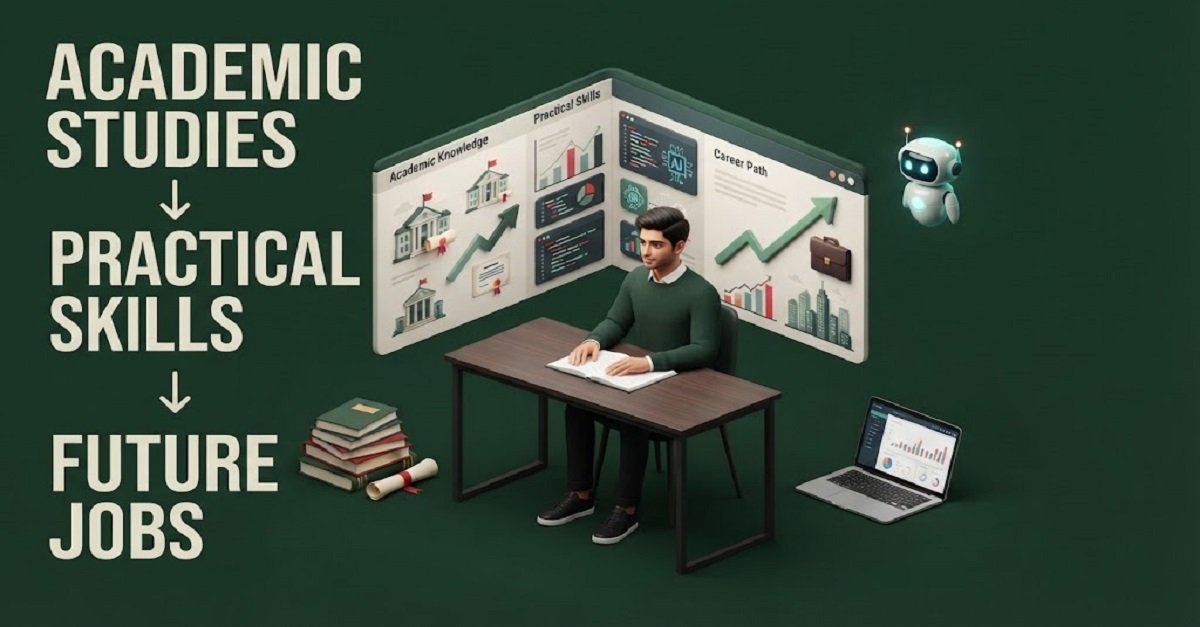
Students should learn more than what is covered in their academic courses if they want to feel prepared for the changing job market. A degree can provide strong subject knowledge, but today's workplace also values practical skills, digital confidence, communication, problem-solving, and the ability to keep learning.
Technology is changing how people work across many industries. Artificial intelligence, automation, remote collaboration, digital platforms, and new business models are creating new opportunities while also changing existing roles.
This does not mean students should ignore their academic studies. Instead, they can combine academic knowledge with practical skills that help them apply what they learn in real situations.
The goal is simple: learn, practice, create, and improve.
Why Students Need More Than Academic Knowledge
Academic education gives students an important foundation. It teaches them how to understand subjects, conduct research, analyze information, and develop knowledge in a chosen field.
However, knowing something and being able to use it are not always the same.
A student may understand marketing theory but have never created a campaign. Another student may study design but have no portfolio. A computer science student may understand programming concepts but have limited experience building a complete project.
That is why students should learn practical skills alongside their academic subjects.
Practical learning helps students understand how their knowledge can be applied outside the classroom. It can also help them identify which career paths interest them before graduation.
1. Digital Literacy
Students should learn how to work comfortably with modern digital tools.
Digital literacy is much broader than knowing how to send emails or use a word processor. Depending on a student's field, useful skills may include spreadsheets, cloud platforms, project management software, online research tools, collaboration platforms, presentation tools, and content creation software.
Technology is now part of almost every professional environment.
Students do not need to master every new platform. Instead, they should develop the ability to understand new tools quickly and use them effectively.
This adaptability can become a long-term career advantage because specific software may change, but the ability to learn technology can remain useful.
2. Artificial Intelligence Skills
Artificial intelligence is becoming part of everyday work.
Students should learn how AI tools can support research, writing, data analysis, brainstorming, automation, customer service, marketing, design, and other professional tasks.
However, AI literacy is not simply about learning how to write better prompts.
Students should also understand the limitations of AI. They need to check information, review outputs, protect private data, and use human judgment before relying on AI-generated results.
A strong approach is to treat AI as a tool rather than a replacement for thinking.
For example, a student can use AI to generate ideas for a project and then independently research, evaluate, improve, and present the final result.
That process develops both technology skills and critical thinking.
3. Communication Skills
Students should learn how to communicate clearly before they enter professional environments.
Good communication can make a difference in interviews, meetings, presentations, emails, client conversations, and team projects.
Students can practice communication by:
-
Giving presentations
-
Writing professional emails
-
Participating in group discussions
-
Explaining complex ideas in simple language
-
Practicing active listening
-
Asking clear questions
Strong communication does not require complicated vocabulary.
In many professional situations, the ability to explain an idea clearly and directly is more useful than using impressive language.
Students should also learn how to adjust their communication for different audiences. A message written for a professor may not be appropriate for a client or coworker.
4. Critical and Analytical Thinking
Students should learn how to evaluate information instead of accepting every answer at face value.
This skill becomes even more important when people have easy access to search engines, AI tools, social media, and large amounts of online information.
Analytical thinking can help students ask better questions:
-
What is the actual problem?
-
What information supports this conclusion?
-
Is the source reliable?
-
What information is missing?
-
What are the possible consequences?
-
Are there other solutions?
These habits can help students make better decisions in academic and professional environments.
Learning to analyze a problem also makes it easier to break complicated tasks into manageable steps.
5. Practical Project Experience
Students should learn through real projects whenever possible.
A practical project can turn theoretical knowledge into something tangible.
For example:
A marketing student can create a sample campaign for a local company.
A design student can build a branding project.
A video editing student can produce a short promotional video.
A computer science student can develop a small application.
A business student can analyze a company's customer journey.
These projects give students something they can discuss during interviews and add to a professional portfolio.
They also help students discover what they enjoy and where they need more practice.
6. Digital Marketing Skills
Students interested in business, communication, media, entrepreneurship, or creative careers can benefit from learning digital marketing.
Students should learn the basics of content marketing, social media, search marketing, email marketing, analytics, and online advertising.
They do not necessarily need to become full-time marketers.
Understanding how businesses attract attention and convert that attention into customers can be useful in many different careers.
For example, an entrepreneur needs to understand how to reach potential customers. A content creator needs to understand audience behavior. A business employee may need to support a company's online campaigns.
Practical digital marketing projects can therefore be useful additions to academic learning.
7. Local SEO as a Practical Digital Skill
Students should learn local SEO if they are interested in digital marketing, search marketing, or helping small businesses grow online.
Local SEO focuses on improving a business's visibility when people search for products or services in a specific geographic area.
Students can practice by researching a real or sample business and examining its website content, business information, customer reviews, local search intent, and online presence.
For example, a student could create a simple local SEO plan for a dental office, restaurant, home service company, or retail business.
This type of project can become a useful portfolio piece because it demonstrates how the student approaches a real business problem.
It also shows that the student can connect digital marketing knowledge with practical business goals.
8. Content Creation
Students should learn at least one form of content creation that supports their career interests.
Modern businesses use many types of content, including:
-
Blog articles
-
Social media posts
-
Short videos
-
Presentations
-
Graphics
-
Email content
-
Product descriptions
-
Educational resources
Students do not need to become experts in every format.
Instead, they can choose one or two areas and develop strong practical skills.
For example, someone interested in marketing might learn content writing and short-form video editing. A design student might focus on visual design and presentation graphics.
The important thing is to practice creating useful content for a specific audience.
9. Problem-Solving Skills
Students should learn how to solve problems rather than only memorize information.
In professional environments, employees are often asked to deal with situations that do not have one perfect answer.
Problem-solving starts with understanding the issue.
Students can practice by identifying the problem, gathering relevant information, considering possible solutions, evaluating the options, and testing the most reasonable approach.
This method can be used in almost any field.
A business student might solve a customer retention problem. A technology student might troubleshoot a software issue. A marketing student might investigate why a campaign is not generating results.
The subject may change, but the problem-solving process remains useful.
10. Adaptability and Continuous Learning
Students should learn how to keep learning.
The skills needed for a first job may not be exactly the same skills needed several years later. Technology changes, industries evolve, and companies adopt new systems.
Instead of trying to predict every future skill, students can develop a reliable learning habit.
A simple process is:
Learn → Practice → Apply → Review → Improve
This cycle encourages students to keep developing after graduation.
It also helps reduce the fear of new technology because students become more comfortable learning unfamiliar tools.
11. Teamwork and Collaboration
Students should learn how to work effectively with other people.
Most professional environments involve collaboration. Employees may work with managers, coworkers, clients, contractors, or remote teams.
Group projects can provide useful practice.
Students can learn how to divide responsibilities, meet deadlines, give constructive feedback, listen to different opinions, and handle disagreements professionally.
Teamwork also teaches responsibility.
Completing your own part of a project is important, but understanding how your work affects the entire team is equally valuable.
12. Personal Branding and Professional Presence
Students should learn how to present their skills professionally.
This does not mean everyone needs to become an influencer.
A simple professional presence can include a clear LinkedIn profile, a professional email address, a portfolio, and a description of relevant skills.
Students can also document projects while they are learning.
Instead of waiting until graduation to build a portfolio, they can gradually collect:
-
Academic projects
-
Personal projects
-
Internship work
-
Freelance projects
-
Certifications
-
Case studies
-
Relevant achievements
Over time, these examples can show employers what the student can actually do.
13. Basic Business and Financial Skills
Students should learn basic business and financial concepts even if they do not plan to become entrepreneurs.
Understanding revenue, costs, customers, pricing, budgeting, and business goals can help students understand how organizations operate.
Basic personal finance is also useful.
Students can learn about budgeting, saving, responsible spending, taxes, and financial planning.
These skills may not be the main focus of a degree program, but they can become valuable throughout a person's professional life.
14. Networking and Relationship Building
Students should learn how to build professional relationships naturally.
Networking does not have to mean asking strangers for jobs.
It can begin with conversations.
Students can connect with professors, alumni, classmates, mentors, industry professionals, and people working in fields they want to explore.
They can attend career events, participate in professional communities, join relevant online discussions, or ask experienced professionals about their work.
The purpose is to learn, exchange ideas, and build genuine relationships.
Over time, these connections can help students understand different career paths and industry expectations.
15. Build a Portfolio, Not Just a Resume
Students should learn to show their abilities, not only describe them.
A resume can list education, experience, and skills. A portfolio can provide evidence.
A graphic design student can show completed designs.
A video editor can show edited videos.
A writer can publish selected articles.
A marketer can present campaign examples.
A developer can demonstrate applications or websites.
A portfolio does not need to contain dozens of projects.
A few well-presented projects can show a student's ability to think, create, solve problems, and complete work.
How Students Can Start Without Feeling Overwhelmed
Students should learn one skill at a time rather than trying to master everything.
The best starting point depends on their academic field and career goals.
Business Students
Consider learning digital marketing, analytics, presentation skills, and basic financial concepts.
Technology Students
Focus on practical projects, AI tools, cybersecurity awareness, programming, or data skills.
Design Students
Develop design software skills and build a strong visual portfolio.
Communication Students
Practice professional writing, content creation, research, presentation, and audience analysis.
Engineering Students
Combine technical knowledge with project management, communication, teamwork, and practical problem-solving.
The goal is not to collect as many certificates as possible.
The goal is to become capable of doing useful work.
Academic Education and Practical Skills Should Work Together
Students should learn to connect their academic knowledge with practical experience.
A degree can provide subject knowledge, research ability, discipline, and a deeper understanding of a field.
Practical learning adds another layer.
It helps students understand how that knowledge works in real situations.
The combination can be powerful:
Academic Knowledge + Practical Skills + Real Projects + Communication + Continuous Learning
This approach can help students become more confident when they begin applying for internships, freelance opportunities, and entry-level positions.
Final Thoughts
Students should learn more than what appears in a syllabus if they want to prepare for a changing professional environment.
Academic education remains important, but students can strengthen their career preparation by developing digital literacy, AI skills, communication, analytical thinking, practical project experience, teamwork, and adaptability.
They do not need to master everything before graduation.
Instead, they can choose skills that support their interests, practice them consistently, and create real projects that demonstrate their abilities.
The most valuable habit may be the willingness to keep learning.
When students combine what they study with what they can actually do, they become better prepared to adapt, contribute, and continue growing throughout their careers.